Most real estate investors face the same bottleneck: capital. You save enough for one down payment, buy one property, and then spend months -- sometimes years -- saving up for the next one. The BRRRR strategy is designed to break that cycle.
BRRRR stands for Buy, Rehab, Rent, Refinance, Repeat. It is a capital-recycling method where you purchase a distressed property below market value, renovate it to force equity, rent it out, then refinance to pull your capital back out -- and use that capital to do it all over again. When the numbers work, one pool of investment capital can fund property after property, turning a single deal into a growing portfolio.
The strategy has been gaining momentum heading into 2026, particularly as the fix-and-flip market has become less profitable. According to ATTOM Data Solutions, flipping margins have compressed, pushing more investors toward the BRRRR model because it offers an alternative exit: rental income rather than a sale. But BRRRR is not a shortcut, and executing it poorly can tie up your money in a property that does not perform. Here is how each step works and what to watch for.
Step 1: Buy -- Finding the Right Property
The BRRRR strategy starts with buying a property below its potential market value. You are looking for distressed, neglected, or cosmetically outdated properties where the current price reflects the property's condition rather than its location or structural fundamentals.
The critical metric here is the 75% Rule: your total investment (purchase price plus rehab costs) should not exceed 75% of the property's after-repair value (ARV). This builds in enough margin to cover refinancing costs and ensures you can pull most or all of your capital back out when you refinance.
Example: If a property has an ARV of $200,000, your all-in cost (purchase plus rehab) should stay at or below $150,000.
Financing the initial purchase is one of the trickier parts. Conventional mortgages typically will not fund a property in poor condition. Most BRRRR investors use one of these approaches:
- Cash purchase -- simplest, but requires significant upfront capital
- Hard money loans -- short-term, high-interest loans from private lenders based on the property's value, not your income. Expect rates of 10 to 14% with 1 to 3 points
- DSCR loans -- qualify based on the property's rental income rather than your personal income; rates running around 6 to 7% in early 2026. But keep in mind DSCR loans can lock you in with a 3–7-year prepayment penalty.
- Home equity line of credit (HELOC) -- borrow against equity in a property you already own
Step 2: Rehab -- Forcing Equity Through Renovation
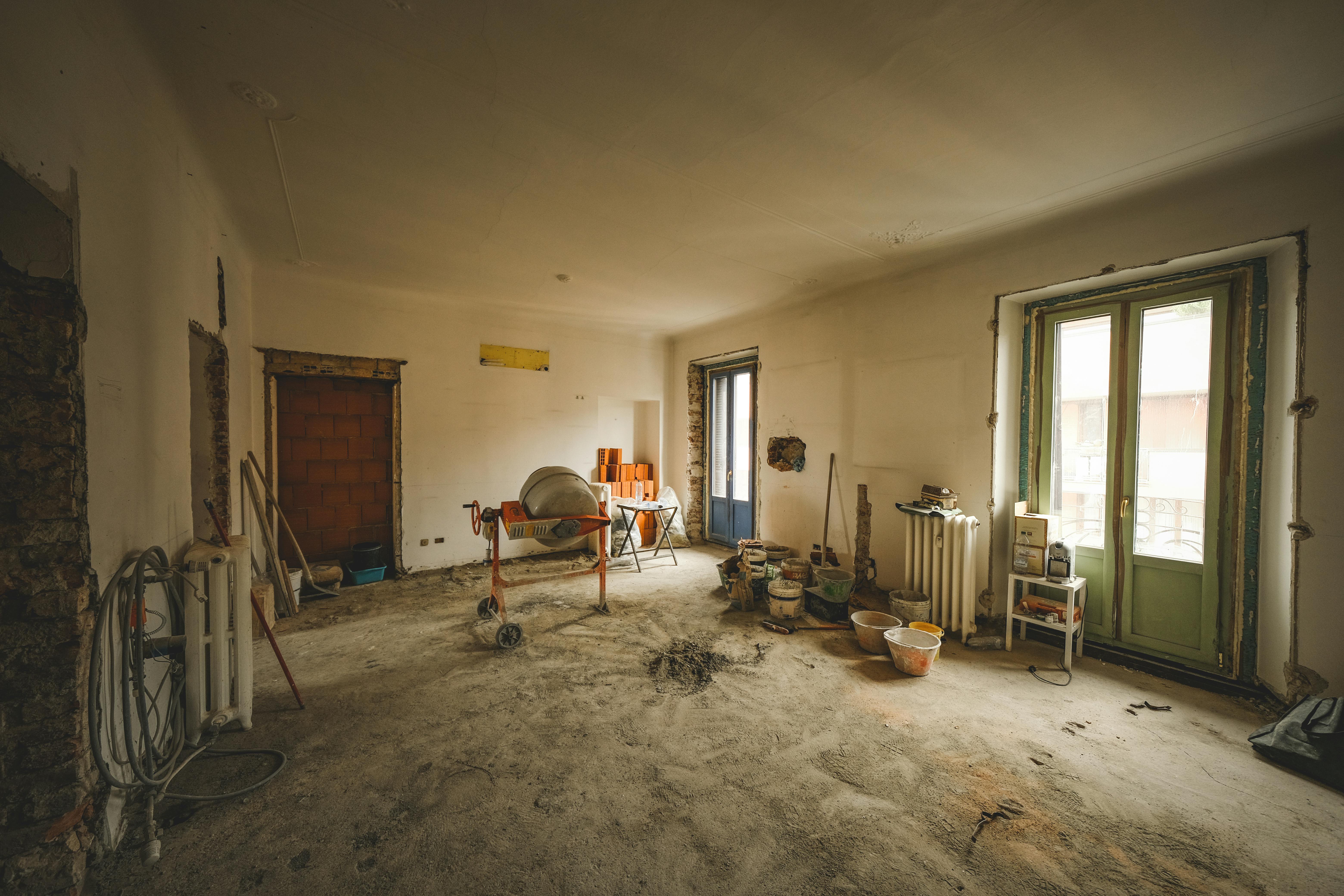
The rehab phase is where you create value. The goal is not to build a dream home -- it is to make targeted improvements that increase the property's appraised value and rental appeal at the lowest reasonable cost.
Focus your budget on the renovations that move the appraisal needle the most:
- Kitchens and bathrooms -- these consistently deliver the highest return on renovation investment
- Flooring -- replacing worn carpet with LVP or hard surface flooring modernizes the entire feel
- Paint -- fresh, neutral paint inside and out is one of the cheapest value-adds
- Curb appeal -- landscaping, exterior paint, and a clean entryway affect both appraisals and tenant interest
- Mechanical systems -- HVAC, plumbing, and electrical updates protect you from expensive surprises down the road
A critical rule: always add 10 to 20% contingency to your rehab budget. Cost overruns are the norm, not the exception. If your budget is $30,000, plan as if it could reach $36,000. Underestimating rehab costs is one of the most common reasons BRRRR deals underperform.
Step 3: Rent -- Stabilizing the Property With Income
Once the rehab is complete, your next priority is getting a tenant in place. Lenders will want to see the property generating rental income before they approve a cash-out refinance, and every month the property sits vacant is a month of carrying costs eating into your returns.
Price the rent competitively using a comparative market analysis -- check 3 to 5 similar rentals in the area for current asking rents. You want a rent level that attracts a qualified tenant quickly rather than chasing the absolute maximum and waiting months for a lease-up.
Screen tenants thoroughly. A tenant who pays late, causes damage, or breaks the lease early can derail your timeline and your numbers. This is also the stage where many investors decide to bring in a property manager, especially if they plan to scale. Managing one rehab project is one thing; managing a growing portfolio of tenants across multiple properties is a different level of commitment.
Step 4: Refinance -- Recovering Your Capital
This is the engine of the entire strategy. A cash-out refinance replaces your initial financing (or returns your cash) with a new, long-term mortgage based on the property's improved appraised value. The difference between the new loan amount and what you owe goes back in your pocket -- ready to fund the next deal.
Current refinance requirements (2026):
- Loan-to-value (LTV): Most lenders cap investment property cash-out refinances at 75% LTV for single-unit properties and 70% for 2-4 unit properties
- Seasoning period: Lenders typically require you to have owned the property for at least 6 months before refinancing. Some require 12 months
- Credit score: 620 minimum for most programs, though 680 or higher will earn significantly better rates
- Cash reserves: Expect to show 6 to 12 months of mortgage payments in reserves after closing
- Debt-to-income ratio: Lenders generally want DTI below 43 to 50%, depending on the program
Example: You buy a property for $120,000, spend $30,000 on rehab (total: $150,000), and the post-rehab appraisal comes in at $210,000. At 75% LTV, you can refinance up to $157,500 -- enough to recover your entire $150,000 investment and pocket $7,500 for closing costs or reserves. Now you have your original capital back, plus a cash-flowing rental property with a long-term mortgage.
The honest reality in 2026's rate environment: most BRRRR deals will not result in "zero money left in the deal." According to REI Prime, investors should expect to leave $15,000 to $35,000 of equity behind. The metric that matters is your cash-on-cash return on whatever capital remains tied up.
Step 5: Repeat -- Scaling Your Portfolio
With your capital recovered (or mostly recovered), you start the cycle again. Each completed BRRRR deal adds a rent-generating asset to your portfolio. Over time, the compounding effect is significant -- mortgage balances decline, property values appreciate, and rental income grows.
Some investors are also adopting what has been called the "BRRRRR" approach -- adding a fifth R for "Rate Drop." The idea is to buy and stabilize properties now while inventory is available and rates are elevated, then refinance again later when interest rates decline to improve cash flow. In a higher-rate environment, patience becomes part of the strategy.
Risks and Realities
BRRRR is powerful when executed well, but it carries real risks:
- Rehab cost overruns can eliminate your margin. Always budget conservatively and get contractor bids in writing.
- Low appraisals can prevent you from pulling your capital out. If the appraisal comes in below your ARV estimate, you are stuck with more money in the deal than planned.
- Vacancy during lease-up costs you carrying expenses every month. Price the rent to fill the property, not to maximize on paper.
- Interest rate risk on your initial financing (hard money or bridge loans) can compound quickly if the rehab or tenant placement takes longer than expected.
- Market timing -- if property values decline after your rehab, your refinance math changes dramatically.
This is not a passive strategy. It demands hands-on involvement, strong local market knowledge, and a reliable team of contractors, lenders, and (often) a property manager.
Key Takeaways
- BRRRR lets investors recycle capital by buying distressed properties, renovating to force equity, renting for income, and refinancing to recover their investment for the next deal.
- Use the 75% Rule as your go/no-go filter: purchase plus rehab should not exceed 75% of after-repair value.
- Current refinance requirements include 75% max LTV, 6-month minimum seasoning, 620+ credit score, and 6-12 months of cash reserves.
- Budget 10-20% contingency on every rehab. Expect to leave some capital in each deal in today's rate environment.
- BRRRR is not passive. It requires active deal-finding, project management, tenant placement, and financial discipline.
If you are exploring BRRRR deals in the Greensboro area and need a property management partner to handle the rent and manage phases, Doss & Spaulding Properties works with investors at every stage -- from lease-up to long-term management. Contact us for a free consultation on your next investment.